2026 Annual SRNT-E Conference

21st - 23rd Sep 2026

Conference Programme

Accordion Arrow

The conference will begin on 21 September in the morning with pre-conference workshops (all free of charge). This will be followed by registration and lunch, before the opening ceremony, which is expected to start at around 12:45. The conference will conclude on 23 September at approximately 16:00.

Please download the provisional programme below. A full conference programme and an electronic abstract book will be available nearer the time of the conference.

Keynote Speakers

Accordion Arrow

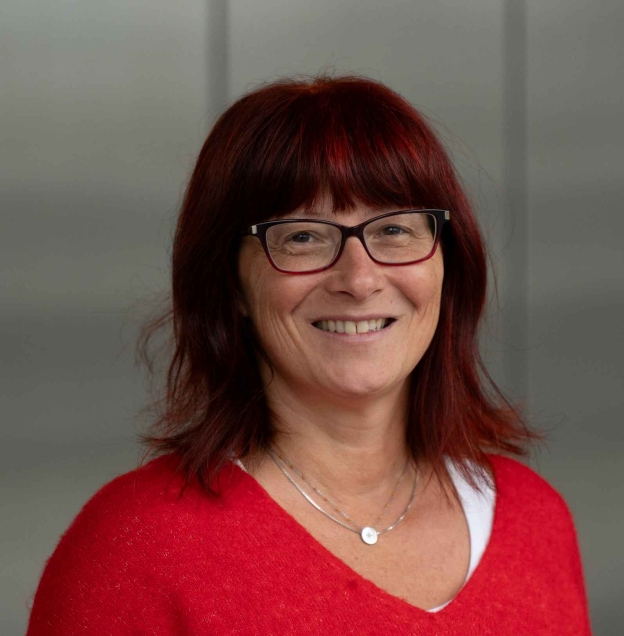
Dr. Stéphanie Caillé-Garnier

Research Director at the French National Centre for Scientific Research (CNRS) and Institute for Cognitive and Integrative Neurosciences of Aquitaine, University of Bordeaux.

Keynote title: Not All Brains Are Equal: The Neuroscience of Nicotine Vulnerability

Dr. Caillé-Garnier obtained her doctorate in Neurosciences and Neuropharmacology from the University of Bordeaux in 2000. Upon joining the CNRS in 2005, the researcher's primary focus was on the consequences of chronic drug exposure in rodents, with a particular emphasis on nicotine, opioids, and the endocannabinoid system. Subsequently, she shifted the focus of her research to the investigation of predictive factors associated with vulnerability to addictive behaviors. As a Principal Investigator (PI) or co-investigator on several university and national agency funding projects, she elucidated the role of interindividual differences, whether attributable to sex differences, cognitive or emotional profiles, in the expression of vulnerability to drug of abuse.

Beyond her academic research, Dr. Caillé-Garnier has served as a national and international expert on public health and regulatory matters. Since 2017, she has contributed as a scientific expert to ANSES (French Agency for Food, Environmental and Occupational Health & Safety) in the working group on tobacco and vaping products. Furthermore, she was a key contributor to the European "Joint Action on Tobacco Control" from 2017 to 2020, where she helped shape science-based policy recommendations. 

Visit website External link icon

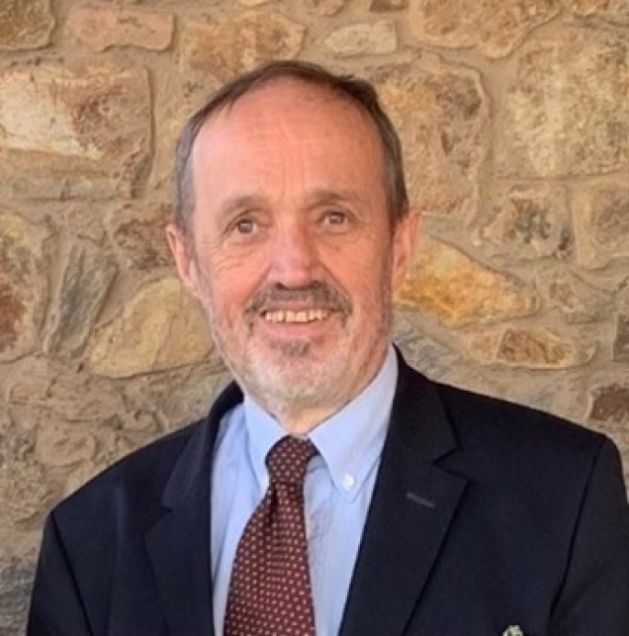
Luk Joossens

Senior Policy Advisor, Smoke Free Partnership, Brussels, Belgium

Keynote Title: Reflections on 50 years of tobacco control in Europe

Luk Joossens obtained a Licence de sociology, KU Leuven, Belgium, March 1972 and Maîtrise en sociologie, Sorbonne, Paris, November 1972. Since then, for almost 50 years he has contributed to the different aspects of tobacco control, such as the eight editions of the Tobacco Control Scale (2006-2026), passive smoking, advertising, labelling, taxes, smuggling (1995-2025), tracking and tracing, tobacco industry tactics, Belgian and EU tobacco control policy, FCTC, Protocol to eliminate illicit trade in tobacco products. 

Luk Joossens worked closely together with consumer organisations (1973-2003), Europe against Cancer progamme (1988-1995), International Union against Cancer (strategic leader 2006-2009), European Cancer Leagues (1995-2020), Belgian Foundation against Cancer (2003-2016). Framework Convention Alliance (2007-2012), Smoke Free Partnership (2022-2026). He advised extensively international bodies on tobacco control such as the World Health Organization (from 1990 to 2025), the World Bank, The European Commission and the FCTC secretariat. In 2006, he received the American Cancer Society “Luther Terry Award” for Outstanding Individual Leadership in Tobacco Control and in 2015 the World Health Organization Director-General’s Special Recognition of Contribution to Global Tobacco Control.

Visit website External link icon

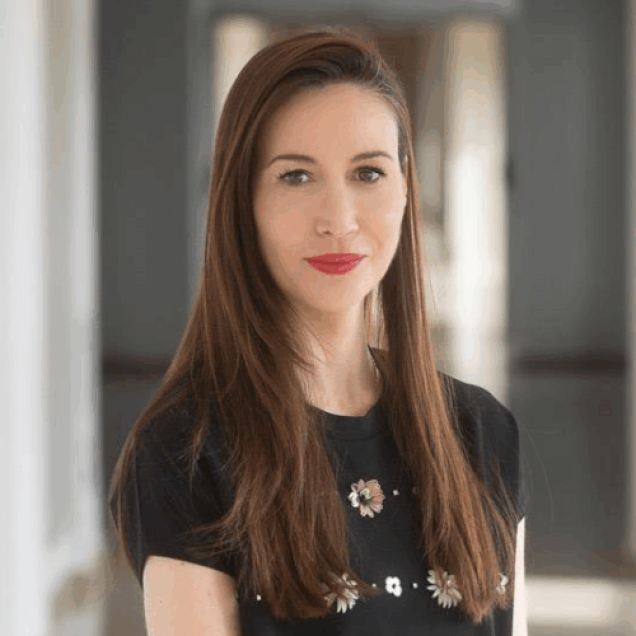
Dr Cristina Martínez

Head of Cancer Prevention Programme and Tobacco Control Unit at the Catalan Institute of Oncology, University of Barcelona Associate Lecturer, Faculty of Nursing, University of Barcelona

Keynote title: Why Evidence Is Not Enough: Making Smoking Cessation Happen in Hospital Care

Dr. Martínez is a senior researcher in tobacco control and implementation science. Her main areas of research include the evaluation of tobacco control policies in health care services, by assessing the impact of smoke-free policies and evaluating the effectiveness of smoking cessation and training programs. She is currently developing and testing the effectiveness of tobacco cessation training programs among healthcare professional students, and she is also evaluating policy interventions to promote smoking cessation among vulnerable persons (mentally ill or with substance abuse disorders) and promoting smoke-free environments in private settings (homes).

Visit website External link icon

Dr Tessa Langley

Associate Professor in Public Health Economics and Evaluation, Nottingham Centre for Public Health and Epidemiology, University of Nottingham, UK

Keynote title: Beyond Health: The Economic and Equity Implications of Tobacco and Vaping Policies

Dr Tessa Langley is an Associate Professor in Public Health Economics and Evaluation. She completed an Honours degree in Economics and Economic History at the University of Warwick, followed by a Master’s in Public Health at the University of Nottingham, before continuing to a research role, PhD and subsequently an academic position at the University of Nottingham. She specialises in public health economics and evaluation, with a focus on tobacco control and e‑cigarette policy. She has led numerous studies evaluating tobacco control policies in the UK and assessing the economic impact of tobacco use, highlighting how reducing smoking rates not only improves health but also helps reduce economic inequalities. In addition to her research, Dr Langley is a member of the Royal College of Physicians’ Tobacco Advisory Group, contributing to regular evidence reviews on tobacco and nicotine policy, and serves as Deputy Editor of Nicotine & Tobacco Research.

Visit website External link icon

Opening ceremony debate

Accordion Arrow

Thank you to everyone who submitted an idea for the debate this year.  As the most commonly requested idea, and due to it's key relevance to the field and our conference theme, this years debate will be: 

"Tobacco end game should aim for a smokefree and nicotine free generation"

 Debate team 

 Arguing "for" the proposition (smokefree and nicotine free generation), we are pleased to be joined by: 

  • Prof Janet Hoek
  • Patricia MacNeil

Arguing "against" the proposition (smokefree generation only) we are pleased to be joined by:

  •  Prof Jonathan Foulds
  •  Prof Mohammed Shoaib

We look forward to an interesting debate and discussion with the audience on this important topic!

Please find more info on the debate team via the download file below!

Pre-conference Workshops (free of charge)

Accordion Arrow

Pre-conference workshops will run from 10.30 - 12pm on Monday 21st September. These workshops are available free of charge. An option to register for the workshops will be available during registration for the conference.

Career Paths in Tobacco & Nicotine Research: Insights and Advice for Early Career Researchers 

  • Presenters: Simon Ducarroz, Amanda Farley, Lukasz Balwicki, Janet Hoek, Felix Naughton, Florence Cousson-Gelie 
  • This workshop is organised by REFERTab at the invitation of SRNT-Europe. It targets early career researchers (ECRs) working in tobacco and nicotine research. The session offers a structured space for ECRs engage with senior researchers on career trajectories, professional challenges, and key decisions in the field.


Tobacco Research with Inclusion Health Populations: What Works, What Doesn't, and What Next?

  • Presenters: Caitlin Notley, Anna Varley, Vera Buss, Zoe Swithenbank, Nicola Lindson, Amanda Farley
  • Populations defined as ‘inclusion health’ (e.g., people experiencing homelessness, substance use dependencies, vulnerable migrants) face extreme social exclusion and as a result their smoking is not widely recorded, prioritised or treated. Despite high rates of smoking (up to 80%), these individuals remain substantially underrepresented in the tobacco research literature within Europe, and evidence regarding effective cessation interventions tailored to their circumstances is limited. Furthermore, methodological standards commonly employed to test smoking cessation interventions, including study designs and outcome measures, may be incompatible with the realities of research in this context and be limited in their capacity to measure the impact of interventions. The workshop comprises three structured components. First, researcher-led presentations will provide critical, reflexive accounts of empirical work undertaken with inclusion health groups, foregrounding both methodological innovations and limitations. Second, facilitated breakout discussions will afford participants the opportunity to interrogate these findings, contribute complementary perspectives, and identify cross-cutting methodological and ethical tensions. Third, a collaborative plenary will synthesise emergent themes and co-develop a structured action plan delineating priority research question, recommended methodological frameworks, and strategies for embedding meaningful public and patient involvement throughout the research lifecycle.


Optimization of tobacco interventions via the multiphase optimization strategy (MOST): An informal introduction

  • Presenters: Linda Collins, Megan Piper
  • Intervention optimization via the multiphase optimization strategy (MOST) enables the investigator to look inside the “black box” and develop an intervention that strikes a strategic balance of effectiveness, affordability, scalability, and efficiency. Although the tobacco field has been a leader in applications of intervention optimization, many behavioral scientists working in tobacco have not yet considered optimizing the interventions they are developing. In this workshop Linda M. Collins (New York University, USA) and Megan Piper (University of Wisconsin, USA) will offer an informal introduction to intervention optimization, with the aim of helping attendees see how intervention optimization can further tobacco control science. We will start with a brief introduction to MOST and an example of intervention optimization in tobacco research. The rest of the time will be spent in open discussion of the intervention optimization concept and how it can further the research agendas of attendees.